Why a Quality Face Paint Sponge Makes All the Difference
Cheap sponges waste paint and ruin designs. Here's why quality face paint sponges matter, the 3 shapes every painter needs, and how to care for them.

Share
Let's talk sponges — because they don't get nearly enough credit.
Brushes are glamorous. Rainbow cakes are exciting. But sponges? Sponges are the quiet workhorses doing the heavy lifting on almost every single design. A smooth base coat, a quick butterfly wing, a clean stencil application — that's all sponge work. And the difference between a cheap sponge and a quality one shows up immediately on the skin.
If you've ever struggled with streaky coverage, patchy blending, or paint that just won't go on smoothly, your sponge might be the problem. Here's what you need to know.
Why Cheap Sponges Don't Work for Face Paint
Not all sponges are made for body art. Makeup sponges, craft store foam wedges, and those cheap packs you find online — they're designed for completely different things, and they'll fight you every step of the way.
Here's what goes wrong:
- Foam latex makeup sponges repel water. Face paint is water-activated, so a water-repellent sponge just pushes the paint around instead of blending it smoothly.
- Cheap synthetic sponges break down fast. They shed pieces into your paint, lose their shape, and need constant replacing — so you end up spending more money in the long run.
- Low-density sponges don't hold enough paint. You end up reloading constantly, which slows you down and creates an uneven finish.
A quality face painting sponge is dense enough to absorb and distribute paint evenly, soft enough to feel comfortable on skin, and durable enough to survive hundreds of washes. That's a completely different tool than a dollar-store foam wedge.
The 3 Sponge Shapes Every Face Painter Needs
You don't need a massive collection — just three shapes and you can handle almost any design.
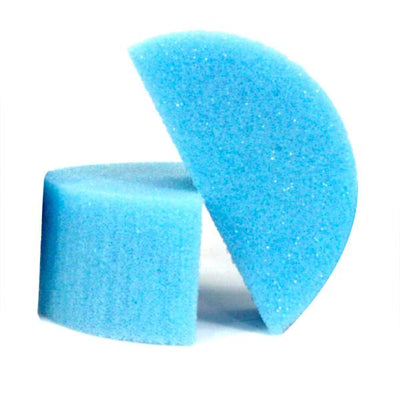
1. The Round Sponge (Full or Half-Round)
This is your everyday workhorse. A high-density round sponge absorbs paint beautifully and delivers a smooth, even base coat every time. Cut one in half and you get even more versatility — flat edges for straight lines, rounded edges for blending, and pointed corners for getting into tight spots.
Best for: Base coats, broad coverage, blending, rainbow cake application
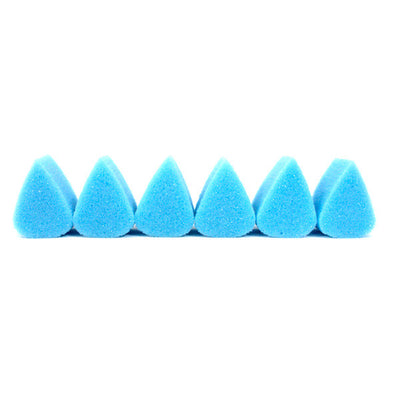
2. The Petal Sponge (Tear-Drop)
The tear-drop shape gives you precision without switching to a brush. The narrow tip handles tight areas like the corners of eyes, while the wide end covers larger spaces. Petal sponges are amazing with split cakes — one press and you get a perfect multi-colored petal or butterfly wing.
Best for: Butterfly wings, flower petals, detailed sponge work, split cake designs
3. The Dauber Sponge
These small round sponges fit on your fingertip or the end of a short stick. They're perfect for stencil work — dab paint through a face painting stencil and you get clean, crisp results without flooding the edges.
Best for: Stencil application, small dots, circular blending, cheek designs
How to Take Care of Your Sponges
Quality sponges last a long time — but only if you take care of them. Here's the routine:
- Wash between every client. This is non-negotiable for hygiene. Rinse with clean water and give a squeeze to remove paint.
- Deep clean at the end of the day. Use mild soap and warm water, or toss them in a mesh bag and run them through the washing machine.
- Dry completely before storing. Damp sponges get musty fast. Spread them out and let them air dry fully.
- Keep extras on hand. Because sponges need to dry between uses, having several of each shape means you always have a clean, dry one ready for the next face.
Stock Up on the Right Sponges
Having the right sponges in your kit is one of those small upgrades that makes a huge difference in your speed and your results. Browse our full sponge selection to find the shapes and densities that work for your style, or check out our Brushes & Sponges collection for the complete toolkit.
Not sure which sponges are right for you? Reach out to us — we're happy to help you figure it out.