Basic Supplies for Face Painting: What You Actually Need (and What You Don't)
Not sure what face painting supplies you need? Here's a no-nonsense guide to the essential paints, brushes, sponges, and extras every face painter should have.

Share
You know what I see all the time? Someone buys one of those party store face paint kits, tries to paint a butterfly on their kid, and it cracks before the candles are even lit. Then they think face painting is just... hard.
It's not hard. They just had the wrong supplies.
The truth is, having the right tools makes face painting easier, faster, and way more fun. So let's talk about what you actually need — and what you can skip when you're starting out.
Face Paint (The Actual Paint)
This is the most important thing to get right. Professional face paint is water-activated, skin-safe, and formulated to go on smooth, stay vibrant, and wash off easily. The stuff at the drugstore? That's not the same thing.
Here's what to look for:
- Water-activated paints — these come in solid cakes that you activate with a wet brush or sponge. They're easy to control, blend beautifully, and dry quickly on skin.
- A basic color set — you don't need 50 colors. Start with a palette that has your primaries (red, yellow, blue), plus white, black, and a couple of extras. You can mix almost anything from there.
- Quality matters — cheap paint cracks, fades, and irritates skin. Professional-grade paints use ingredients like glycerin and are FDA-compliant for cosmetic use. Browse our Face & Body Paint collection to see what the pros use.
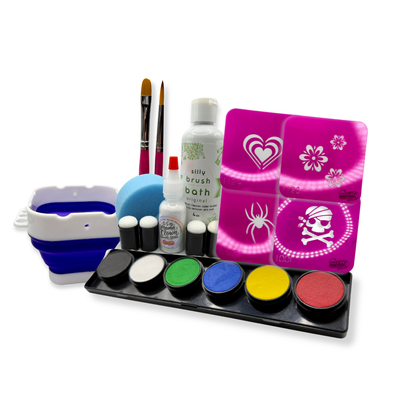
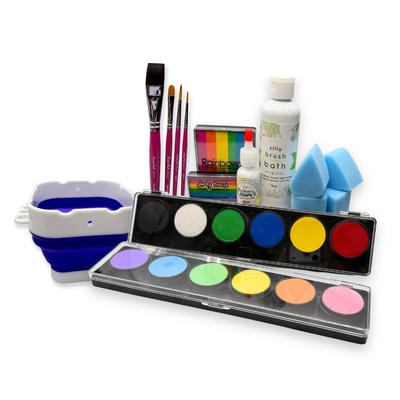
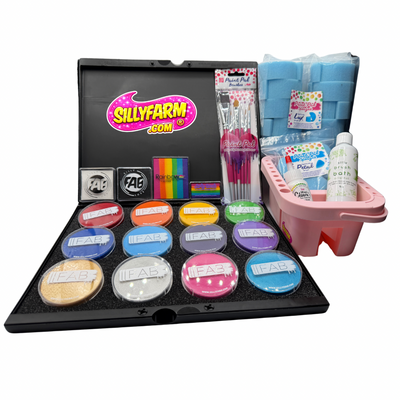
If you want everything in one purchase, check out our Kits & Palettes — they come with paints, brushes, and sponges so you're ready to go right out of the box.
Sponges
Sponges are how you get that smooth, even base coat that makes everything else look polished. You'll use them more than you think.
What you need:
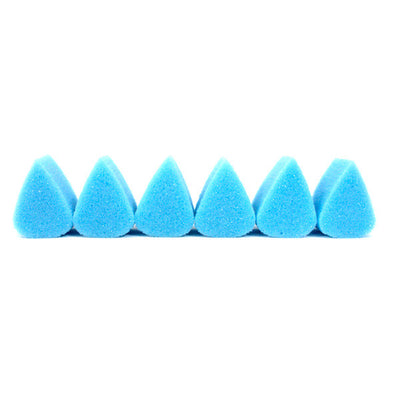
- Petal sponges — these are small, firm foam sponges shaped for precision. Great for cheek art bases, blending colors, and getting into smaller areas.
- Round sponges — larger, for covering bigger areas like a full forehead base or body paint work.
The key is firmness. A good face painting sponge is denser than a craft sponge — it holds paint better and gives you more control. Check out our Sponges collection for options that actually work.
Pro tip: Buy more sponges than you think you need. Dedicated face painters keep separate sponges for different color families so they're not constantly washing between kids at events.
Brushes
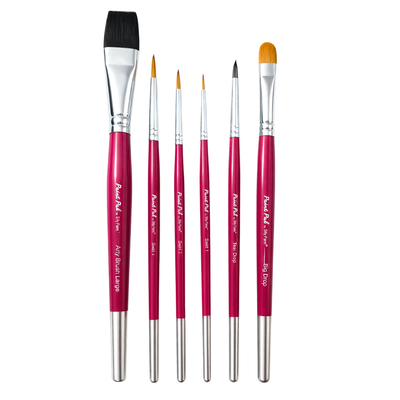
You don't need a drawer full of brushes on day one. Here are the three types that matter:
- Round brushes — your workhorse for outlines, details, teardrops, and line work. Get at least one thin round and one medium round.
- Flat brushes — perfect for filling larger areas, painting petals, and creating bold strokes. A 3/4" flat is a great all-purpose size.
- Liner brushes — thin, long-bristled brushes for fine lines and intricate details. You'll want one eventually, but it's not urgent for beginners.
Synthetic bristles work great with water-activated face paint and are easier to clean. Browse our Brushes & Sponges collection to find sets that give you a good starter range.
Glitter (Yes, Already)
I know, I know — we're talking about basics. But let me tell you, glitter turns a "that's cute" into a "WOW." Even a simple butterfly becomes magical with a little sparkle.
Two important things about glitter:
- Only use cosmetic-grade glitter. Craft glitter is NOT safe for skin or near eyes. Cosmetic glitter is made with different materials and cut differently so it's safe for face and body use.
- A little goes a long way. You don't need to dump glitter everywhere. A light dusting on cheekbones, the center of a design, or along an outline is all it takes.
Our Mama Clown Glitter comes in both transparent and opaque varieties — transparent adds shimmer without covering your work, opaque gives you bold glitter coverage.
Stencils
Stencils are a game-changer, especially when you're painting at events with a line of kids waiting. Instead of freehanding every design, you hold a stencil against the skin, sponge paint over it, and boom — instant design.
They're great for:
- Speed at busy events (birthday parties, carnivals, festivals)
- Consistency when you need to paint the same design 40 times
- Adding details like stars, swirls, or scales on top of a freehand base
Stencils aren't cheating. They're a tool. Every working face painter uses them.
What You Can Skip (For Now)
- Airbrush equipment — cool, but it's a separate skill. Master brush-and-sponge first.
- Specialty colors (neons, metallics, UV) — fun, but your basics will carry you through 90% of designs.
- Elaborate brush sets — you'll figure out which brushes you prefer over time. Don't buy 20 brushes before you know what strokes you actually use.
The Bottom Line
Here's your real starter list:
- A quality face paint palette with 6-12 colors
- 2-3 brushes (one round, one flat, one detail)
- A pack of sponges
- Cosmetic-grade glitter (optional but you'll thank me)
- A few stencils for events
That's it. You can build from there as you figure out your style. And if you're not sure where to start, our Kits & Palettes bundle everything together so you don't have to guess.
Got questions about what to buy? Drop us a line — we love helping painters find the right supplies. And follow us on Instagram and Facebook for design inspiration and tips.