Everything You Need to Know About Airbrush Face Painting
Curious about airbrush face painting? Here's everything you need to know — how it works, what equipment you need, and why so many face painters are making the switch.

Share
If you've ever seen someone at a festival getting a full-face design sprayed on in under two minutes and thought wait, how? — that's airbrushing. And once you try it, you'll understand why so many face painters add it to their toolkit.
Airbrush face painting isn't a replacement for traditional brush-and-sponge work — it's a different tool entirely. Some designs are better suited for airbrush, some for traditional, and the best face painters know when to use each. Let's break it all down.
What Is Airbrush Face Painting?
At its simplest: you're using compressed air to push paint through a small gun, creating a fine mist that lands on skin. Instead of brushing paint on, you're spraying it.
The setup is straightforward:
- An airbrush gun — a small, pen-like tool with a cup on top that holds the paint
- An air source — either a compressor or a CO2 tank that provides the air pressure
- Airbrush paint — specially formulated to flow through the gun without clogging
That's the core kit. You squeeze the trigger, paint comes out as a controlled mist, and you can create everything from smooth gradients to sharp lines depending on how close you hold the gun and how much paint you release.
Why Face Painters Love Airbrush
There are real practical reasons why airbrush has become popular:
- Speed. You can paint a full-face design in 1-2 minutes. At a busy event with 100 kids in line, that matters.
- Lightweight feel. Airbrush paint goes on thin. Kids barely notice it's there, which means fewer complaints and less wiping.
- Even coverage. No brush strokes, no sponge marks — just smooth, blended color. Gradients happen naturally.
- Longevity. Airbrush paint tends to last longer than traditional face paint because it bonds to the skin in thin, even layers.
- Stencil-friendly. Airbrush + stencils is the fastest combo in face painting. Hold the stencil, spray, done.
What Equipment Do You Need?
Let's talk about what you actually need to get started.
The gun:
Airbrush guns come in different styles, but for face painting you want a gravity-feed gun (paint cup on top) with a fine needle. This gives you the control you need for detail work on faces. Check out our airbrush guns collection for options at different price points.
The air source:
You have two main options:
- Compressor — electric, reliable, runs continuously. Best for working from a booth or table.
- CO2 tank — portable, no electricity needed. Great for mobile painters working outdoors or at events without power.
The paint:
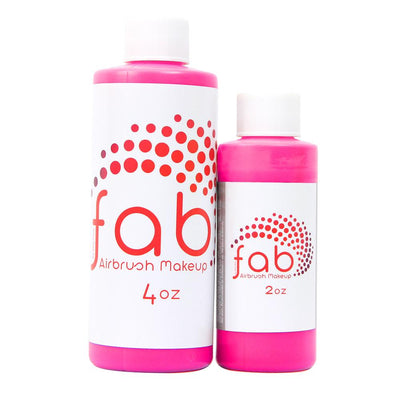
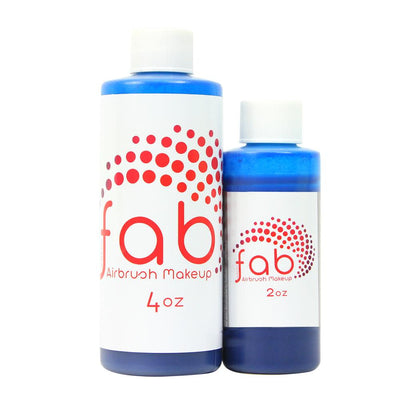
This is important — you can't just put regular face paint in an airbrush gun. Airbrush paint is formulated to be thin enough to flow through the gun without clogging. It's water-based, skin-safe, and comes in all the colors you'd expect.
Browse our airbrush paint options to see what's available. They work great for face painting, body art, and even everyday makeup application (foundation, contouring, highlight).
Stencils:
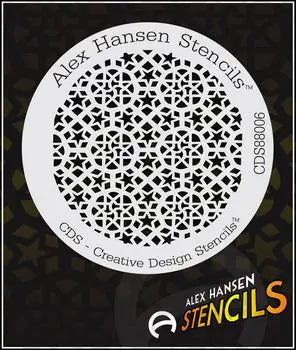
Airbrush stencils are designed specifically for spray application — they sit flat against the skin and have clean edges so you get crisp results. We carry a wide range of airbrush stencils from simple shapes to elaborate full-face designs.
Getting Started: Tips for Beginners
If you're new to airbrush, here's what I'd tell you:
- Start with a kit. Don't try to piece together equipment individually on your first purchase. A good starter kit comes with a gun, hose, compressor, and some paint so everything works together out of the box.
- Practice on paper first. Before you spray anyone's face, practice on paper or your own arm. Get a feel for trigger control — how far to pull back, how close to hold the gun, how to move for even coverage.
- Clean your gun after every use. This is non-negotiable. Airbrush guns clog if you don't flush them properly. Run clean water through after every color change, and do a thorough cleaning at the end of every session.
- Learn trigger control. A light pull gives you a fine line. A full pull gives you wide coverage. The distance from the skin matters too — close for detail, far for broad coverage. This takes practice but becomes muscle memory fast.
- Combine with traditional painting. Most working face painters use airbrush for the base and broad effects, then add details with brushes. You don't have to choose one or the other.
Airbrush vs. Traditional: When to Use What
| | Airbrush | Traditional |
|---|---------|-------------|
| Best for | Speed, smooth bases, stencil work, large events | Detail work, line art, teardrops, small designs |
| Setup time | More equipment to set up | Grab a brush and go |
| Portability | Heavier (compressor/tank) | Just a kit bag |
| Cleanup | Must flush gun thoroughly | Rinse brushes and sponges |
| Learning curve | Moderate (trigger control) | Varies by design complexity |
Most pros use both. You'll find your own balance over time.
Maintaining Your Equipment
Your airbrush gun is an investment. Take care of it:
- Flush between colors — run clean water through to prevent muddy color mixing
- Deep clean after every gig — disassemble the tip, soak in cleaning solution, run clean water through the full system
- Store properly — never leave paint sitting in the cup. Store the gun clean and dry.
- Replace needles and nozzles — these wear out over time. Keep spares in your kit so a bent needle doesn't end your day.
Ready to Try Airbrush?
Browse our full Airbrush collection for guns, compressors, paints, and stencils. If you're not sure which setup is right for you, reach out to us — we'll help you pick the right kit for your budget and experience level.
Follow us on Instagram and Facebook to see airbrush designs in action.